
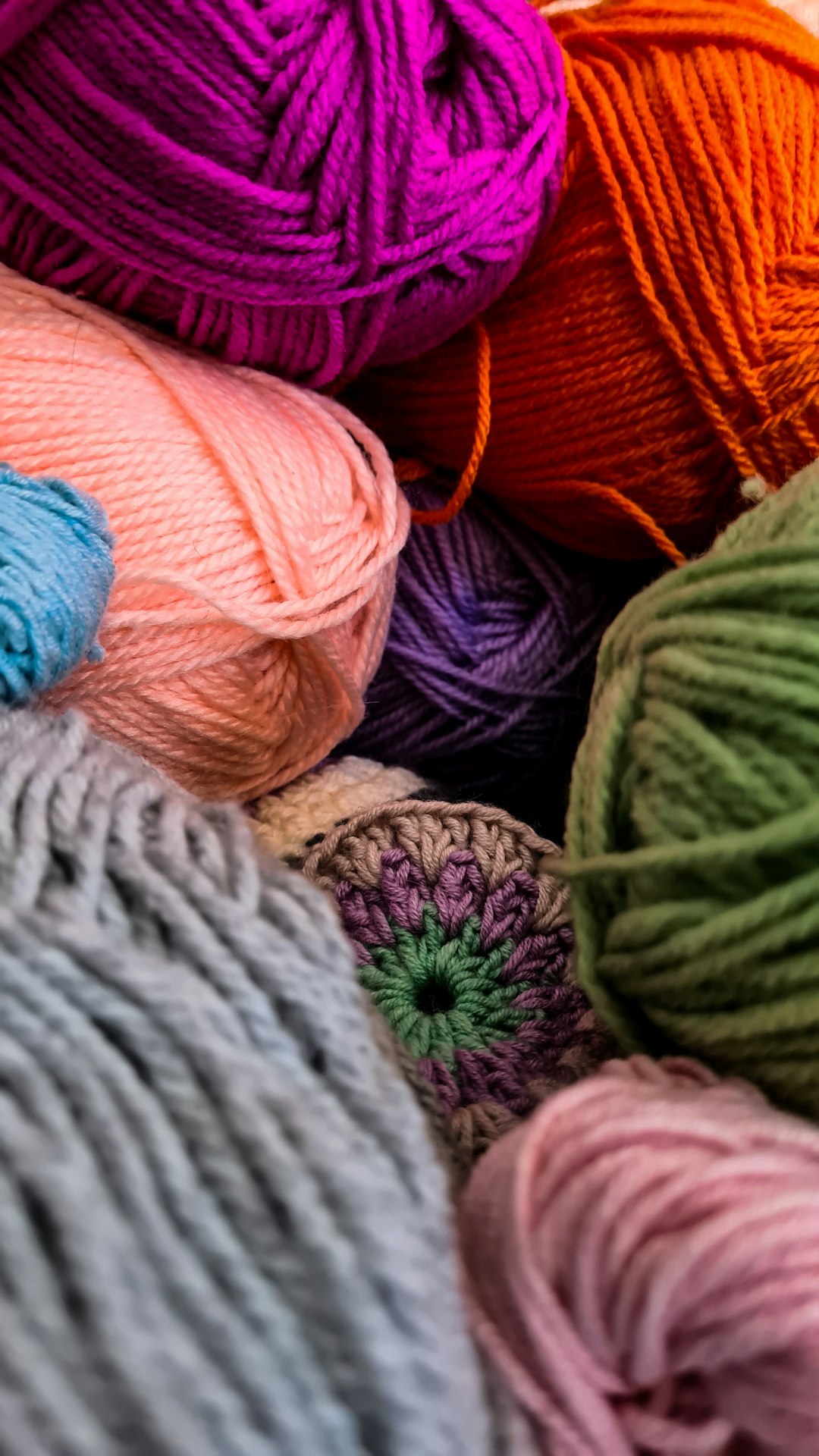
Wool is warm, elastic and resilient, which is why it remains a classic choice for crochet sweaters, hats, mittens, scarves and blankets. Merino is wool from Merino sheep; it is often finer and softer than many general-purpose wools, but the exact feel still depends on fiber diameter, spinning, finishing and the wearer’s sensitivity.
This guide helps you choose wool confidently without treating every skein as identical. Read the label for fiber percentages, recommended care and dye-lot information, and always test a swatch against the skin if the project will be worn close to the face or neck.
Quick answer: For a first wool project, try a smooth light-colored worsted-weight superwash wool or wool blend. Use untreated wool when you want traditional warmth, grip or intentional felting.
Why crocheters choose wool
- Natural elasticity: stitches spring back more readily than cotton, helping hats and cuffs keep their shape.
- Warmth: crimped fibers trap air, making wool useful for cold-weather layers.
- Resilience: quality wool can recover from compression and resist looking flat.
- Blocking response: many wool fabrics relax and even out beautifully after washing and shaping.
- Grip: the fiber can hold textured stitches and colorwork securely.
Merino, superwash and wool blends
Merino wool
Merino is valued for softness and fine fibers. It works well for next-to-skin accessories and garments when the wearer finds it comfortable. Soft does not mean indestructible: loosely spun fine merino can pill in high-friction areas.
Superwash wool
Superwash wool is treated so the scales are less likely to interlock and felt during washing. It is often easier to care for, but it may grow more during blocking and can feel smoother or less grippy than untreated wool. Follow the label rather than assuming every superwash yarn has the same machine-wash instructions.
Wool blends
Nylon may add abrasion resistance for socks; acrylic may lower cost and simplify care; alpaca can add warmth and drape. Judge the full fiber percentage, not only the first word on the label.
Best crochet projects for wool
- Beanies, ear warmers, cowls and mittens
- Sweaters, cardigans and vests
- Warm granny-square blankets and throws
- Textured scarves and cable-style crochet
- Felted bowls, bags or slippers made from untreated wool
- Socks or house socks made from a suitable durable blend
When wool may not be ideal
Wool can feel itchy to sensitive skin, may require careful washing, and can felt through heat, moisture and agitation. Some people avoid animal fibers for ethical, allergy or lifestyle reasons. For a gift, ask about fiber preferences and laundering habits before choosing the yarn.
Gauge and hook choice
Wool’s bounce can make a swatch look smaller before blocking and more relaxed afterward. Crochet a swatch larger than the measuring area, wash it using the intended method, dry it flat, and then measure. Use the pattern gauge to select the final hook rather than treating the label’s hook size as a rule.
For drapey garments, a slightly larger hook may help prevent a dense, heavy fabric. For hats or mittens, a closer fabric can block wind better. Keep your tension relaxed enough that the hook moves smoothly.
Felting: accident or design tool
Untreated wool can felt when moisture, heat and agitation encourage the fiber scales to lock together. That can ruin stitch definition in a sweater—or create a strong, dense fabric intentionally for a bowl or bag. Superwash wool is designed to resist this process, so it is not the usual choice for felted projects.
Care and storage
- Follow the ball-band instructions; hand wash when in doubt.
- Use cool or lukewarm water and avoid sudden temperature changes.
- Press out water gently instead of wringing.
- Dry flat while supporting the garment’s full weight.
- Store clean and dry in a sealed container if moths are a concern.
Common wool mistakes
- Buying one skein short and later discovering the dye lot is unavailable
- Skipping a blocked swatch for a garment
- Using superwash yarn for a project meant to felt
- Assuming all merino is machine washable
- Choosing a very soft, loosely spun yarn for a high-friction bag
Wool yarn FAQ
Is merino warmer than acrylic?
Warmth depends on yarn structure, fabric density and garment design as well as fiber. Merino is naturally crimped and insulating, while acrylic warmth varies by construction.
Can beginners crochet with wool?
Yes. Smooth worsted-weight wool has good grip and clear stitches. Avoid fuzzy laceweight yarn for a first attempt because correcting mistakes is harder.
Can wool replace acrylic in a pattern?
Often, if yarn weight and washed gauge match. The finished fabric may be warmer, springier and require different care.
Keep learning
Compare more fibers in our complete crochet yarn types and materials guide. Then use our beginner yarn-choosing guide, check crochet hook sizes, or browse the free crochet pattern library.