
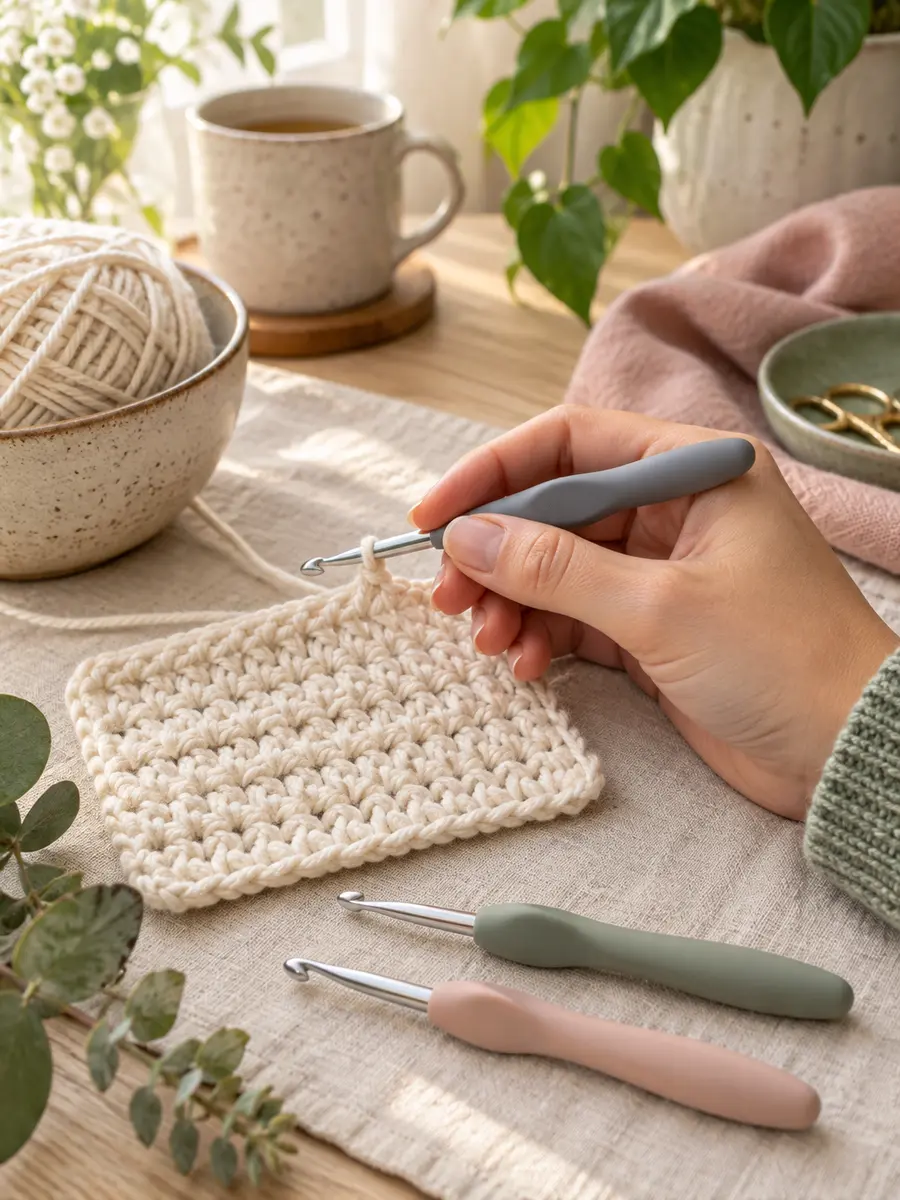
An ergonomic crochet hook has a shaped or cushioned handle designed to reduce how tightly you need to grip the tool. It can make long crochet sessions feel more comfortable, but the best hook depends on your hand size, grip style, yarn, and project. This guide explains the practical differences so you can choose without buying a full set first.
What makes a crochet hook ergonomic?
Standard hooks often have a thin metal or plastic shaft from end to end. Ergonomic hooks add a wider handle made from rubber, silicone, resin, wood, or molded plastic. The larger surface can reduce finger pressure and help the hook sit more securely in your hand.
Pencil grip versus knife grip
- Pencil grip: You hold the hook like a pencil. A shorter handle with a defined thumb rest often feels natural.
- Knife grip: You hold the hook from above like a table knife. A longer, rounded handle usually gives the palm more support.
Neither grip is better. Crochet a small swatch with your normal grip and notice where the handle touches your fingers and palm before choosing a shape.
Handle materials compared
- Soft rubber or silicone: Good cushioning and grip, but it can attract lint or feel warm during long sessions.
- Molded plastic: Lightweight, easy to clean, and available in many shapes. Very smooth handles may feel slippery.
- Wood: Warm and lightweight with a natural grip. It needs gentle care and should not be soaked.
- Resin: Smooth and decorative, but often heavier. Check that the handle is balanced rather than top-heavy.
- DIY foam grips: An inexpensive way to test a wider handle before replacing your hooks.
Inline and tapered hook heads
An inline hook has a throat that stays close to the shaft width and can help keep loops consistent. A tapered hook narrows gradually toward the head and may move through dense stitches more easily. The handle does not change this geometry, so check both the head shape and the grip.
How to test an ergonomic hook
- Choose the hook size you use most often, such as 5 mm for worsted-weight yarn.
- Crochet the same 20-stitch swatch for ten minutes with your current hook and the ergonomic hook.
- Compare your grip pressure, wrist angle, tension, and how often you stop to reposition the hook.
- Check the shaft length. Bulky stitches and multiple loops need enough smooth shaft space.
- Make sure the printed size will not rub off easily; color alone is not a reliable size label.
Choosing the right size
The ergonomic handle does not change the hook size. Use the millimeter measurement recommended by your pattern, then adjust after making a gauge swatch. A 5 mm ergonomic hook and a 5 mm standard hook should form the same loop size, although your personal tension may change when your grip relaxes.
Comfort habits that matter
- Keep your shoulders relaxed and wrists close to neutral.
- Rest your forearms on a cushion or table edge when helpful.
- Take short breaks and stretch your hands during long projects.
- Use smooth yarn while learning so you do not compensate by gripping harder.
- Switch projects or hook sizes instead of repeating one motion for hours.
An ergonomic hook may improve comfort, but it is not a medical treatment. Stop if crocheting causes persistent pain, numbness, weakness, or swelling and seek advice from a qualified healthcare professional.
Common buying mistakes
- Buying a large set before testing one handle shape.
- Choosing the thickest handle without considering hand size.
- Ignoring the usable shaft length.
- Assuming every rubber grip is soft or non-slip.
- Using only the yarn label instead of checking pattern gauge.
A simple recommendation for beginners
Start with one medium-size hook in the 4.5–5.5 mm range, a lightweight handle, a clear millimeter marking, and a shape that suits your normal grip. Use it for a coaster or small swatch before investing in a complete set.
Continue with Crochet Hook Sizes Explained, How to Choose Yarn for Crochet, and How to Keep Crochet Edges Straight.