

Checkerboard crochet looks more complicated than it is. The fabric is still built from basic single crochet; the graphic effect comes from changing color in tidy blocks. It is a good way to make a beginner stitch feel more current without jumping into an advanced technique.
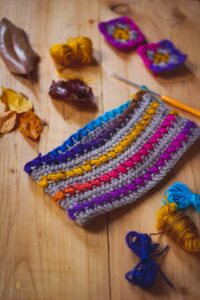
What works best for this stitch
A smooth cotton or cotton-blend yarn keeps the little squares crisp. Choose two colors with enough contrast to show the grid clearly. Cream with black is classic, but softer combinations such as sage with oat or dusty pink with rust feel less harsh.
- Two colors of DK or worsted-weight yarn
- 4–4.5 mm crochet hook
- Scissors
- Yarn needle
Make a small practice panel
Chain 25. Starting in the second chain from the hook, work 24 single crochet stitches. This gives you four blocks of six stitches each.
For rows 1–6, work 6 stitches in color A, 6 in color B, 6 in color A and 6 in color B. For rows 7–12, reverse the order so the first block begins in color B. Continue alternating every six rows.
The color-change trick that keeps the edge clean
Do not finish the last stitch of a color completely. Insert the hook, yarn over and pull up a loop. When two loops remain on the hook, use the new color to yarn over and pull through both loops. The next stitch then begins cleanly in the new shade instead of leaving a visible bump.
If the project is small, carrying the unused yarn inside the stitches can save time. Keep it relaxed so the fabric does not pucker. For a larger bag panel, cutting and rejoining at each block can look cleaner, even if it creates more ends to weave in.
Turn the swatch into something useful
Two matching checkerboard panels can become a simple zip pouch. Make each panel the same size, place them with the right sides facing out and single crochet around three edges. Add a zipper by hand, or leave the top open and add a drawstring.
For a tote bag, make the squares larger rather than adding lots of tiny color changes. Blocks of 8–10 stitches are easier to keep neat and give the bag a bolder, more graphic look.
Common problems
The squares lean to one side
Count every row. Missing one stitch at the edge slowly shifts the whole grid and becomes very noticeable after a few blocks.
The carried yarn shows through
This happens most with a very dark yarn carried inside a pale color. In that case, cut the yarn instead of carrying it, or use colors that are closer in value.
Keep the finish simple
The checkerboard already does most of the visual work, so a plain border usually looks best. One round of single crochet in the darker color is enough to straighten the edges and make the piece feel finished.
If you can make a square of single crochet with even tension, you can make this pattern. The design comes from planning the color changes, not from learning a difficult stitch. When you want to try a lighter fabric next, move on to the Double Crochet Mesh Stitch.