
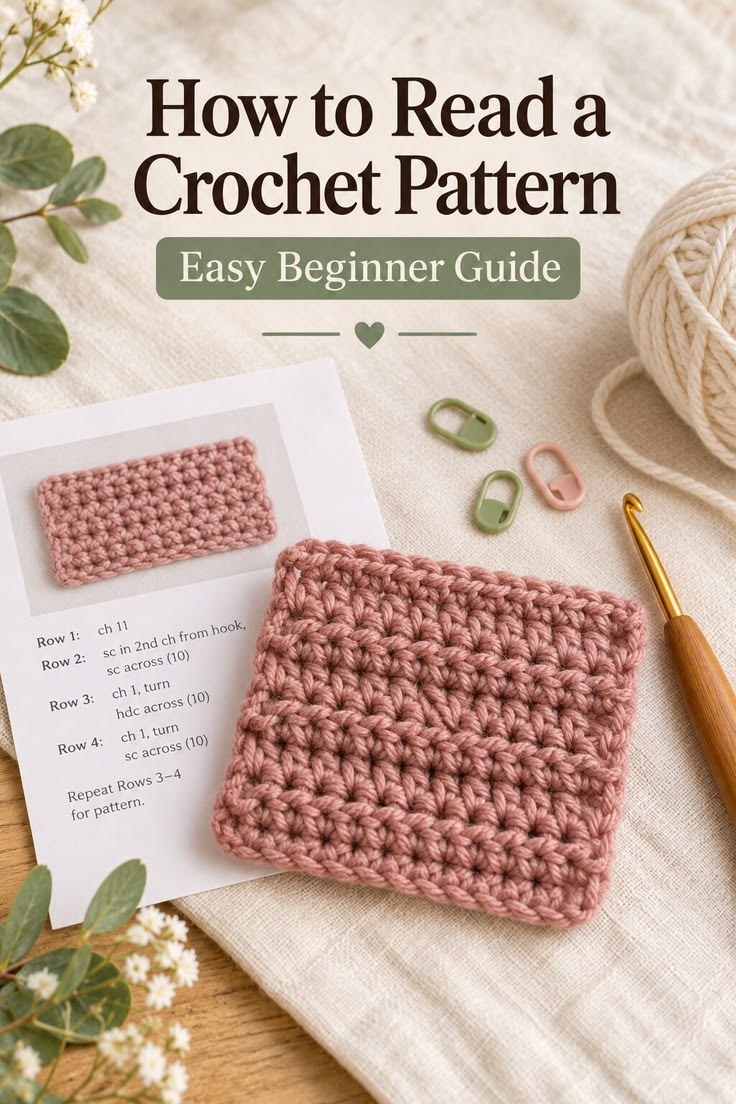
Written crochet patterns can look like a new language at first because they compress repeated instructions into abbreviations and symbols. The easiest way to understand them is to read the pattern in sections instead of trying to decode every line at once.
Check the terminology first
US and UK crochet terminology use some of the same stitch names for different stitches. A well-written pattern should state which terminology it uses. Confirm this before starting because it affects stitches such as single crochet, double crochet and treble crochet.
Read the materials section
Before crocheting, check the recommended yarn weight, hook size, approximate yardage or meterage, and any extra tools such as stitch markers or a yarn needle. If size matters, also look for gauge information.
Learn the common abbreviations
- ch = chain
- sl st = slip stitch
- sc = single crochet in US terminology
- hdc = half double crochet in US terminology
- dc = double crochet in US terminology
- st / sts = stitch / stitches
Patterns often include their own abbreviation list, so use that list as the final reference.
Understand repeats
Asterisks, brackets or parentheses frequently mark instructions that must be repeated. For example, a pattern might say to repeat a group of stitches across the row. Read the complete repeated section once before beginning it so you understand where the repeat starts and ends.
Watch the stitch count
Many patterns show a stitch count at the end of a row or round. Use it as a checkpoint. If your count is different, correct the problem before moving too far ahead. A missing stitch in an early row can change shaping later.
Read one row at a time
Cover the rows you are not working on or use a note to mark your current place. Complete one instruction, then move to the next. This reduces the chance of accidentally jumping ahead or repeating the wrong section.
Check special notes
Designers often explain whether turning chains count as stitches, where to place the first stitch, how pieces are joined and whether a project is worked in rows or rounds. These small notes prevent many common mistakes.
When something does not make sense
Stop and compare three things: your current stitch count, the previous row and the exact wording of the instruction. If the numbers match but the instruction still seems unclear, work a small sample with spare yarn before changing the main project.
Pattern reading gets easier with repetition. Start with short projects that use only a few abbreviations, and keep a small note of the symbols you see most often. A good next practice project is the Easy Crochet Coaster Pattern, where the stitch count stays simple.